In the labyrinth-like streets of Bristol during the early 1990s, an artist began mysteriously leaving his mark on the city. His subject was rats, spray-painting and stenciling them across urban walls. No one saw him do it, or knew his face.
His mischievous work stood out, and he would become known as ‘Banksy’. Part graffiti artist, part social commentator, and part enigma, his identity was as elusive as the messages in his murals.
Banksy’s humble beginnings began in the underground scene of Bristol, where street art collided with punk rock and DIY culture. He made bold statements that blended humour, politics, and irony, eventually expanding his works to London, and across the UK.
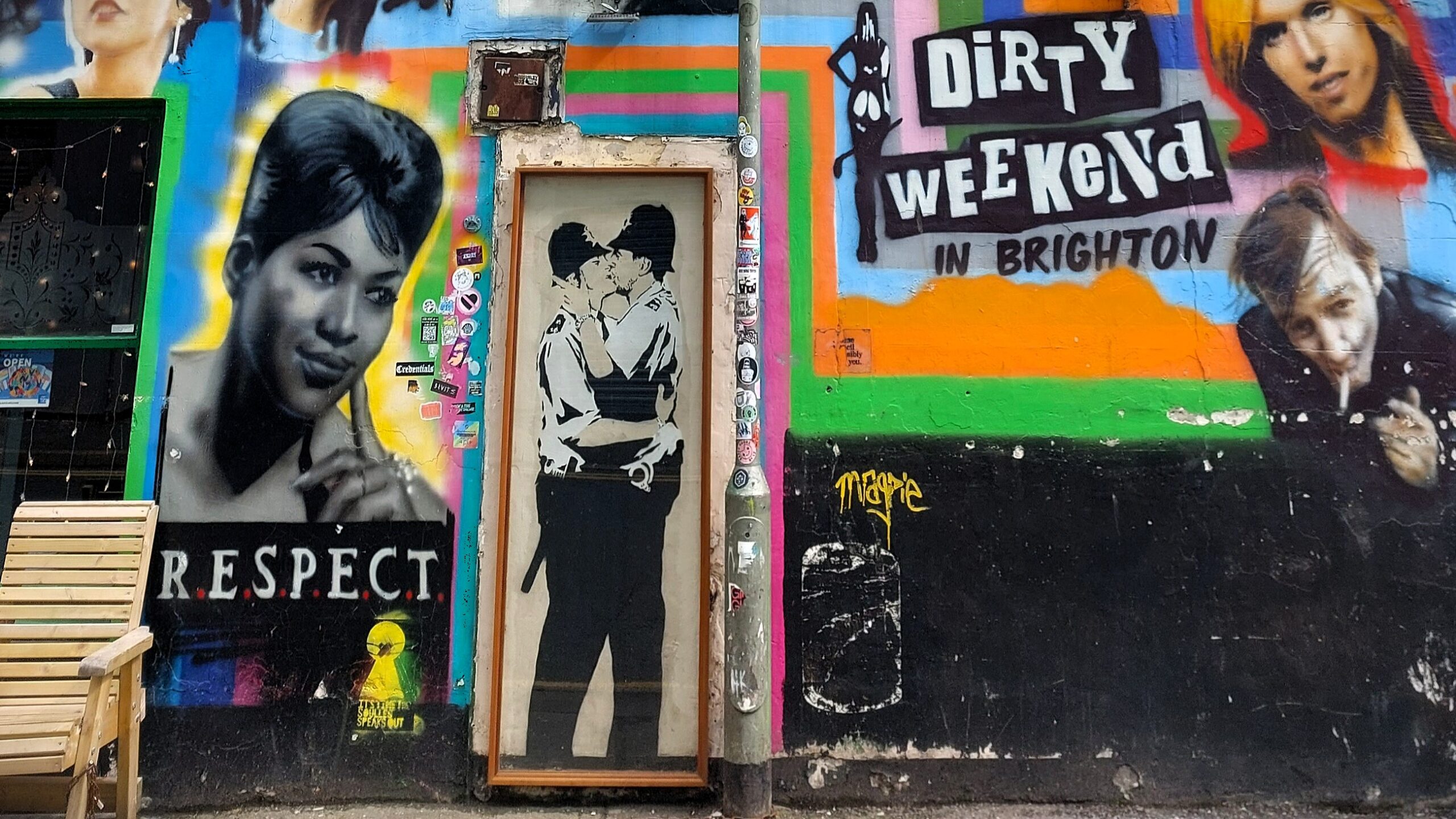
Brighton mural one of the most iconic
The ‘Kissing Coppers’ mural appeared on the side of a pub in Brighton in 2004, depicting two British policemen in a passionate kiss. The image quickly became one of his most iconic works, sparking debates on authority, sexuality, and public art. The mural is still on public display, and preserved behind protective glass due to its cultural significance.
Banksy’s stencils challenged viewers to see the familiar world differently. His work broke out internationally, too, appearing on walls and bridges in New York, Paris, and beyond. He sometimes chose controversial locations like the Israeli West Bank barrier.
By the early 2000s, Banksy had become a cultural phenomenon. His pieces combined the immediacy of urban graffiti with the sophistication of high art. Blurring the line between recognition and rebellion, sparking conversations, and sometimes debates. Showing audiences that art is as much about performance as it is about the paint.
Banksy’s art could appear anywhere: the side of a derelict building, a subway tunnel, or on a piece of furniture left on a street. Each work carried a story, presented in images so simple yet provocative enough to became instantly iconic.
Adding sculptures to his portfolio
Decades into his mysterious career, Banksy began his era of sculptures. The first-ever one he made depicted a larger-than-life rat holding a painter’s brush, standing atop a pedestal reminiscent of classical monuments. Fans flocked to see it, while critics hailed it as a daring expansion of Banksy’s visual universe.
On April 29, 2026, a new Banksy sculpture appeared overnight in central London. The artwork depicts a suited figure with a billowing flag covering their face, striding confidently and blindly into the abyss.
It reminds the world that Banksy’s art continues to be a reflection of society, and a snapshot of current culture. It challenges expectations and provokes thought, while continuing to carve out an unparalleled place in the history of contemporary art.